
"We are willing to speak to any of their leaders," Jaitley was quoted as saying by Bloomberg News.

'Challenge is basically near-term growth as the outlook has turned a bit adverse.'

'Significant reductions in the compliance obligations mean businesses earlier struggling to comply will now have enough time to prepare and comply within the extended timelines.'
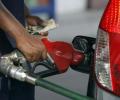
Petrol and diesel prices were hiked for the fourth consecutive day on Saturday by 35 paise per litre, pushing the total increase in rates on petrol to Rs 36 per litre and on diesel to Rs 26.58 since early May 2020 when taxes on the two fuels were raised to record levels. Petrol in Delhi now costs Rs 107.24 a litre and diesel comes for Rs 95.97, according to a price notification of state-owned fuel retailers. The latest increase that follows the unrelenting hike in international oil prices has pushed pump rates across the country to their highest-ever levels.
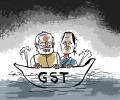
Agra has long been known for the Taj Mahal, but it is also a manufacturing hub filled with micro, small and medium enterprises (MSMEs) that make everything from electronic components to metal products, from paints and chemicals to footwear. And five years after the introduction of the Goods and Services Tax (GST), the MSMEs here complain that while the indirect tax regime has been transformative, cutting out the need to file multiple taxes, its biggest drawback has been the delay in credit refunds. Whoever you speak to - MSME owners, tax lawyers, or industry bodies like the National Chambers of Industries and Commerce (NCIC), Agra Footwear Manufacturers and Exporters Chamber (AFMEC) and Agra Shoe Manufacturers Association (ASMA) - they all emphasise that the GST continues to face some key challenges.

Some states are taking a legal view on the state GST rate and the compensation rules ahead of the Goods and Services Tax (GST) Council meeting, which is likely to be held in mid-June, said people in the know. While the agenda is still being finalised, several states are likely to take up the matter related to GST compensation and may pitch for its continuation beyond the June 30 deadline. States would like to know how they would divide the compensation collected after June 2022 for payment of principal and interest of compensation shortfall borrowing and arrears to states, sources said.
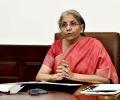
Amid record-high fuel prices, Finance Minister Nirmala Sitharaman on Monday said there is no proposal as of now to bring crude oil, petrol, diesel, jet fuel (ATF) and natural gas under the Goods and Services Tax (GST). When the GST was introduced on July 1, 2017, amalgamating over a dozen central and state levies, five commodities - crude oil, natural gas, petrol, diesel, and aviation turbine fuel (ATF) - were kept out of its purview given the revenue dependence of the central and state governments on this sector. This meant that the central government continued to levy excise duty on them while state governments charged VAT. These taxes, with excise duty, in particular, have been raised periodically.

Criticising various provisions in the proposed GST regime, Moily said it will be a "technological nightmare" and the anti-profiteering provisions in it are "far too draconian."

Goods like chocolates, chewing gum, shampoo, deodorant, shoe polish, detergents, nutrition drinks and marble will now attract 18% GST>
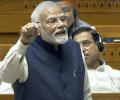
Prime Minister Narendra Modi on Saturday launched a scathing attack on the Congress party, accusing it of repeatedly "wounding" the Indian Constitution. He claimed that the Congress, driven by its "lust for power," has consistently undermined the principles of the Constitution. Modi, however, praised India's democratic journey since its independence, highlighting the country's strong democratic roots and its unwavering commitment to its founding principles. He underscored the importance of unity for India's future development and emphasized that the Constitution is the bedrock of that unity.

Agriculture implements that are currently taxed up to 18 per cent may come under the 12 per cent or the 5 per cent bracket.

States are apprehensive of losing their rights to raise revenue during emergencies.

The Modi government could steer through Parliament 59 out of 75 Bills.
The all-powerful GST Council on Friday decided to charge food delivery platforms such as Swiggy and Zomato a tax even as it extended concessional tax rates on certain COVID-19 drugs by three months till December 31. The Council, which comprises the Union finance minister and her state counterparts, decided to continue keeping petrol and diesel out of the GST purview as subsuming the current excise duty and VAT into one national rate would impact revenues. Briefing reporters on the decisions taken by the Council at a meeting here, Union Finance Minister Nirmala Sitharaman said GST has been exempted on muscular atrophy drugs like Zolgensma and Viltepso, which cost crores of rupees.

In May, price growth for drugs was in negative territory at (-)1 per cent

The finance ministry has suggested forming a GST council, headed by the Union finance minister, to address disputes between the Centre and the states in the proposed GST regime.
The prime minister is aware that whatever be its consequences, a new taxation regime cannot be launched closer to the general elections in 2019. Thus, any date after April 2017 for the launch of GST is risky, says A K Bhattacharya.
There is a need to incentivise R&D investments, offer corporate tax concessions and establish an effective intellectual property rights regime in order to push the growth of domestic pharmaceutical industry, as per the industry bodies. Outlining the sector's wish list for the upcoming Union Budget, Organisation of Pharmaceutical Producers of India (OPPI) Director General Anil Matai urged the government to explore methods to incentivise R&D investments, such as deductions on R&D expenses, research-linked incentives for MNCs, and corporate tax concessions.
.jpg)
The GST will subsume most of the indirect taxes like excise duty and service tax

States' demand of compensation from Centre for loss of tax revenue not on agenda.

With 7 per cent economic growth, India is not creating enough jobs as reflected by the number of applicants for vacant posts in some states, Reserve Bank's former governor Raghuram Rajan said and suggested the government needs to focus on promoting labour-intensive industries to generate employment. Rajan further said some Indians, especially those at upper level, are comfortable and have high incomes, but consumption growth from the lower half of the country has still not recovered to pre-pandemic level.
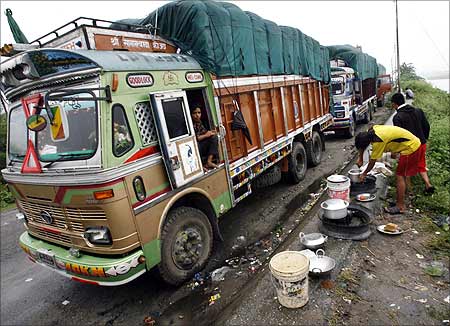
Finance Minister Arun Jaitley, who is meeting state finance ministers on Thursday to garner support for the Constitution Amendment Bill for a goods & services tax (GST), is likely to immediately dole out about Rs 13,000 crore (Rs 130 billion) in Central Sales Tax (CST) compensation to states.

In a string of tweets and replies, Swamy also said that GST can be implemented only if the Supreme Court clears a petition on levy of entry tax
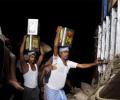
By doing away with the 1 per cent inter-state tax over and above the GST rate, the government has met one of the three key demands over which Opposition Congress has been blocking the Bill in the Upper House

Crypto exchanges have been asked to furnish details this month itself.
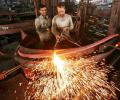
Experts share their views on the steps that will help businesses become GST-ready.
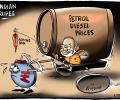
5 commodities namely crude oil, natural gas, petrol, diesel, and aviation turbine fuel (ATF) were kept out of GST's purview given the revenue dependence of state governments on these sectors.
GST is a landmark reform considering the sweeping changes it brings about in the indirect tax regime in India.

FMCG, automobile industries say if GST regime kicks in, rail hubs can take Make in India to a new high.
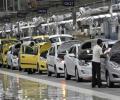
Moody's expects tax to be lower than the multitude of taxes such as sales tax, excise duties, local taxes, and value-added taxes the automobile sector currently pays
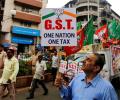
The 41st meeting of the GST Council, to be held via video conferencing, has just one agenda for discussion -- making up for shortfall in states' revenues, sources said.
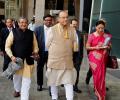
The government is going all out to spread awareness about the new indirect tax regime, and training lawmakers is being seen as a necessary first step.

Also on the anvil is abolition of distinction between Plan and non-Plan expenditure and replacing it with capital and revenue expenditure
Only after its recommendations will the central GST, integrated GST and state GST Bills be taken up

'Otherwise, how is the government going to make more revenue?' 'The most important thing the GST does is to transfer money from the household consumers who are the most productive users of capital to the most unproductive users of capital, namely the government.'
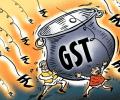
The shortfall in the Centre's GST collections has raised concerns over it meeting the fiscal deficit target of 3.3 per cent of GDP, reports Ishan Bakshi.

Raghuram Rajan said the passage of the GST Bill augurs well for the growing political consensus for economic reforms.

GST will yield 'better value for money' for car buyers, increasing automobile industry demand, says Sandip Neogi.

Godrej group Chairman Adi Godrej describes in an interview to Viveat Susan Pinto the way forward for the conglomerate after the implementation of the GST.

'If my understanding is correct, one has to file not less than 37 returns per year for every ordinary business, and that too per state.' 'If you are doing businesses in Chennai, Bangalore and Hyderabad, you have to file 37x3 returns every year!' 'The consequence of GST will be chaos, confusion and possibly economic crisis.'
